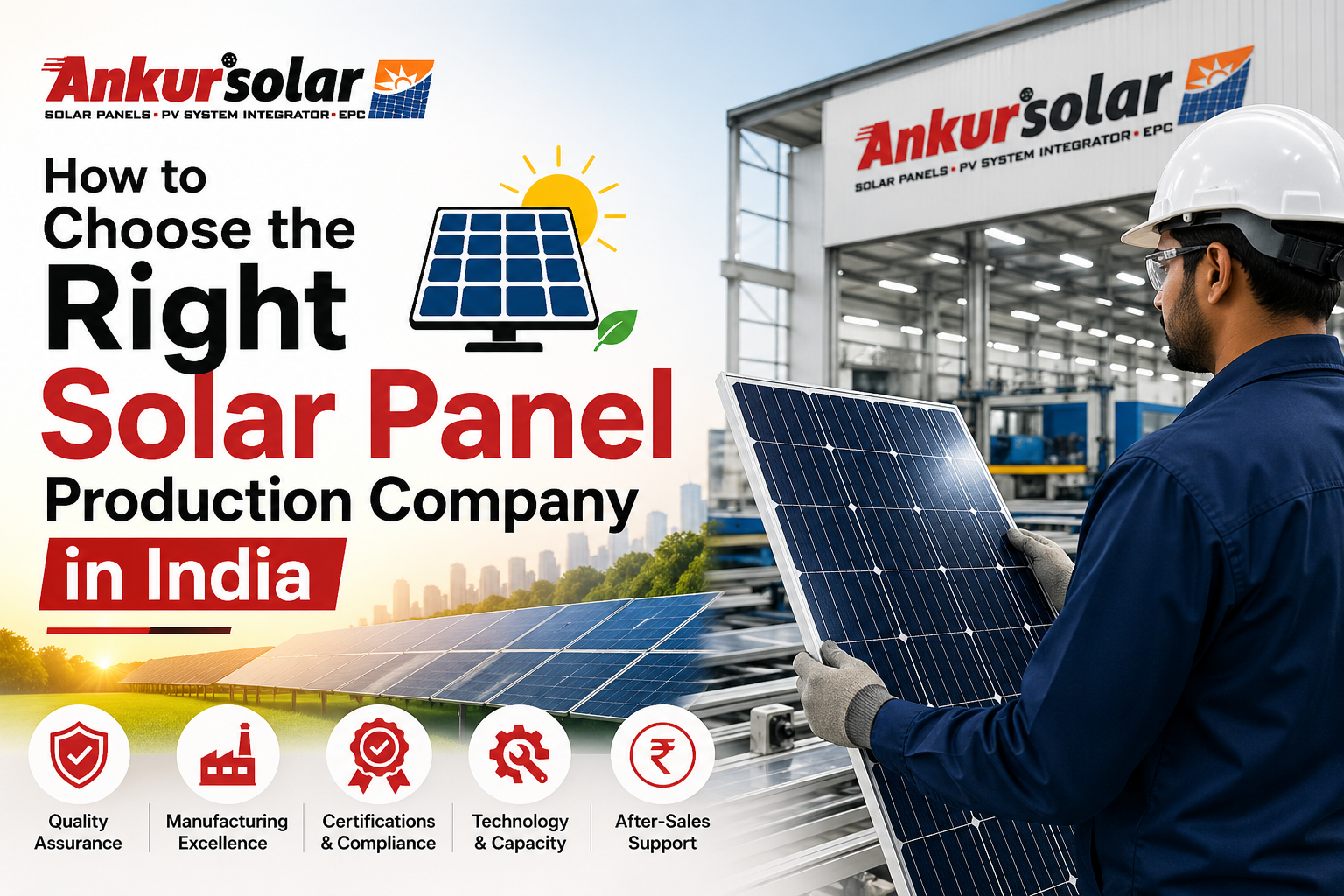
India’s solar industry is playing a vital role in its energy strategy. Electricity consumption is accelerating, and so is the demand for increased capacity. Conventional methods cannot deliver this increase in demand. So, the policymakers encourage the usage of solar energy on a mass level. With the government initiatives, reduced technology cost and inclination of entrepreneurs, the solar energy panels are rapidly becoming a common feature in households, industries, large business buildings and institutional buildings. The solar production companies play an essential role. They reduce dependency on the imported panels, and thus lower the cost for the easy acceptability of these systems.
Why Manufacturer Selection Matters
Without a basic understanding of solar panel production companies in India, most buyers end up accepting whatever is offered. These panels are one of the rare commodities in our homes that are used for more than 2 decades. So, high durability is expected from the company. A system that should last for such a long period must have sufficient strength, exceptional resilience and other abilities necessary to fight the challenges that come in the way. The manufacturer’s quality standards directly affect these:
- Energy Conversion Efficiency
- Resistance to environmental stress
- Maintenance needs
- Return on investment
Key Factors to Evaluate
To choose a manufacturer that assures great durability, higher output, and a strong warranty backing, follow these tips to evaluate the best ones:
Manufacturing Scale
The manufacturing capacity of the company is a good indicator to assess the scale at which they can handle the projects. Large scale means the company has advanced production facilities, quality management resources, consistent supply capabilities, and strong financial backing, so they can provide warranties and assurances. Well-established and experienced production reduces the risk of delays, shortages, and inconsistencies in delivery.
Solar Panel Range
As the solar panels are expanding in reach, innovations in technology are matching up and leading the way forward. Not all projects need the same solar panels. Mono PERC or Poly PV cells are widely used in rooftop solar installations. TOPCon technology is considered to have the best efficiency. A manufacturer that provides a diverse variety must have great competency, and their panels are made for practical conditions.
Certifications Granted
Standard compliances and certificates must not be ignored for any product. For solar panel manufacturers, it becomes even more relevant because the safety, performance, and longevity are all expected to be higher than those of an average product. Check the certifications and approvals held by MNRE, ALMM, UL and IEC.
Track Record
Check the track record of the past projects undertaken and accomplished by the company. It reveals the timely delivery according to the scale, diversity of projects handled and the clients who rely on them.
Warranty Terms
A solar panel typically lasts more than 20-25 years with periodic maintenance and checks. Check whether the manufacturer is providing enough warranty on the panel. Strong after-sales support also matters in this regard.
How to Approach Pricing
Though solar panels are being subsidized on a commercial scale, it still costs significantly for any buyer. Approaching the price can be tricky with so many types of panels by different companies. A proven trick to make it easy is focusing on value for money instead of comparing costs. Consider numerical data like cost per watt, energy rating, warranty coverage and lifespan. Also note the maintenance requirements, as the good panels are expected to require low maintenance. These numbers will give a proper insight into whether your investment is worth it.
Summarizing Essential Criteria
| Criteria | What to Look For | Why It Matters |
| Manufacturing Capacity | Large-scale, automated plants | Ensures consistent quality and supply |
| Technology | Mono PERC, Bifacial, TOPCon | Higher efficiency and better output |
| Certifications | BIS, IEC, MNRE compliance | Guarantees safety and performance standards |
| Warranty | 10–12 years product, 25 years performance | Protects long-term investment |
| After-Sales Support | Strong service network | Reduces downtime and maintenance issues |
| Market Reputation | Proven project portfolio | Indicates reliability and trustworthiness |
| Climate Compatibility | Heat and weather-resistant design | Ensures durability in Indian conditions |
| Pricing vs Value | Balanced cost per watt and efficiency | Improves long-term returns |
Final Notes
Solar panels are contributing to India’s energy sector in a positive way. They are the solution to declining natural resources like coal and petroleum, and also a key determining factor shaping how electricity will be consumed in the upcoming years. The solar panel production companies in Indiaare at the centre of this movement. It is not a passable trend but a revolution that transforms. This technology is at an early stage, so those who adopt it soon will clearly have a better advantage in the long run. As a buyer, you should follow the above-mentioned tips to choose a trustworthy manufacturer.
With a strong legacy and proven expertise, Ankur Solar delivers high-performance solar solutions designed for durability, efficiency, and long-term reliability.
FAQ
A solar panel production company uses solar cells, glass, and other materials to make a system that converts the sun’s energy into usable electricity.
An assured way to know whether a solar panel company can be trusted is to check their ALMM, UL, BIS, and IEC certifications, range of panels and capacity.